Interior Painters Sydney: A Room-by-Room Guide to Getting the Best Result
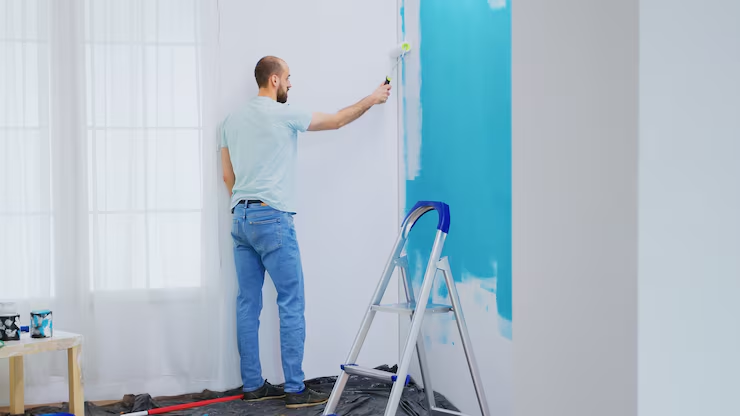
There's a particular kind of quiet satisfaction that comes from standing in a freshly painted room. The light bounces differently. Everything feels crisp and deliberate. If the painter was good, you can't see a single brush stroke, a single drip, or a single edge that doesn't line up perfectly.
That result doesn't happen by accident. It's the product of careful preparation, good technique, and the right products for each room's specific conditions. This guide walks through what good interior painting actually involves, room by room, so you can spot the difference between a painter who delivers and one who just rolls through quickly and moves on.
The Prep Work That Most Painters Rush (But Shouldn't)
Before a drop of paint goes on any wall in any room of your Sydney home, the preparation stage determines how well the job will turn out. Experienced interior painters know this. Rushed painters skip it.
Proper interior prep includes cleaning all surfaces (grease, smoke, and general grime prevent paint from bonding properly), filling every hole, dent, and crack (a quality filler, applied in layers if deep, sanded back flush), sanding back any rough patches or areas where old paint is bubbling or peeling, spot-priming any bare plaster or timber, and masking edges meticulously before the first coat goes on.
This stage can take a full day on a standard Sydney home. If a painter wants to start painting on day one of a project without spending significant time on prep, ask questions.
Kitchens and Bathrooms: The High-Moisture Rooms
Kitchens and bathrooms are the rooms where interior paint jobs most commonly fail — peeling in corners, mould growing behind the paint film, paint bubbling around windows and exhaust fans. The reason is almost always wrong product selection combined with inadequate surface preparation.
In a kitchen or bathroom, you need a paint specifically formulated for high-moisture environments. Products like Dulux Wash & Wear Kitchen & Bathroom or Haymes Shield Series Bathroom & Kitchen contain mould inhibitors and have better moisture resistance than standard wall paints. A good interior painter will specify these products (or equivalent) without being asked in rooms where moisture is present.
Ventilation also matters. In Sydney's humid summers, rooms that don't ventilate properly are prone to condensation, which attacks paint from behind. If your bathroom or kitchen has a ventilation problem, a fresh coat of paint won't fix it — address the ventilation first, then paint.
Living Areas: Colour, Sheen Level, and Getting the Feel Right
Living rooms and dining areas are where colour decisions matter most. These are the rooms you and your family spend the most time in, the rooms your guests see first, and the rooms that set the tone for the whole home.
For living areas, the sheen level of your paint matters as much as the colour. A flat or low-sheen finish gives a softer, more elegant result — it reduces glare and hides imperfections. A higher sheen (satin or semi-gloss) is more washable but shows every imperfection in the wall surface. In a typical Sydney living area with well-prepared walls, a low-sheen is usually the best choice.
Feature walls are popular in Sydney living areas and can look genuinely dramatic when done well. A dark, rich colour on a single wall — deep navy, charcoal, forest green — paired with lighter tones on the other three walls creates depth without making the room feel smaller. Ask your painter to cut in the feature wall with particular care — the line between the feature and adjacent wall is where the quality of the work is most visible.
Bedrooms: Calm, Sleep-Friendly, Done Right
Bedroom paint choices and technique are often underestimated. Most people spend roughly a third of their lives in their bedroom, and the colour and finish of the walls affect how well they sleep more than they realise.
Cool, muted tones — soft blues, warm whites, gentle greens — are consistently associated with better sleep quality. Very bright or highly saturated colours can increase alertness. If sleep quality matters to you (and it should), consider the psychology of colour when selecting bedroom shades.
From a painting technique perspective, bedrooms require the same level of care as living areas. The ceilings need to be properly finished — no roller marks, no visible cut-in lines where the wall meets the ceiling. This is one of those details that most people notice subconsciously even if they can't identify specifically what's wrong.
Hallways and Stairwells: The Transition Spaces That Get Overlooked
Hallways and stairwells are some of the most touched surfaces in any home — and yet they're often the spaces where budget painting shows its age fastest. Grubby marks around light switches, scuffs at shoulder height, smudges near door handles. These high-traffic areas need a washable paint at a higher sheen level than living areas.
For hallways, a satin finish in a warm neutral is the practical choice. It's washable, durable, and covers well. For stairwells with high ceilings, access can be challenging — a good painter will have the right equipment to cut in at height properly rather than leaving ragged edges at the top of the stairwell.
Ceilings: The Most Undervalued Surface in Any Room
Ceilings are painted white in virtually every Sydney home, so most people don't think about them much. But a poorly painted ceiling — visible roller marks, uneven coverage, dirty cut-in lines where the ceiling meets the cornice — pulls the whole room down. A beautifully painted ceiling, on the other hand, makes every surface below it look better.
Flat ceiling white (very low sheen, specifically formulated to hide imperfections) is the standard choice. Two coats are almost always necessary for an even result. The ceiling is usually painted first, before the walls, so that any overspray or drips onto the walls can be covered when the walls are done.
Trim, Doors, and Architraves: Where the Craft Shows
If you want to evaluate an interior painter quickly, look at their trim work. The quality of the paint on skirting boards, door frames, window architraves, and doors is where technique really shows. These surfaces require a different product (typically a semi-gloss or gloss enamel for durability and washability) and a different technique (brush application, careful sanding between coats).
A painter who uses the same roller on trim as on walls, or who doesn't sand enamel between coats, will give you a finish that looks rough and unprofessional. Ask specifically how your painter handles trim work before you hire them.
Want interior painters in Sydney who take the details seriously?
We treat every room in your home with the same care — proper prep, right products, and a finish that makes the difference visible. Call 0424 125 125 or get a free interior painting quote today.
Get an Interior Painting QuoteShare this article: