Epoxy Floor Coating Sydney: The Complete Guide for Homes, Garages, and Commercial Spaces
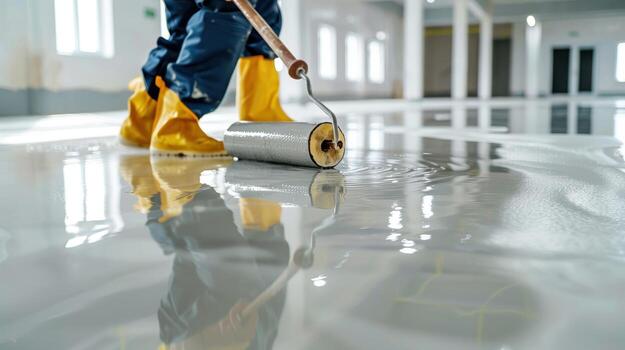
There's something immediately satisfying about a well-done epoxy floor. The surface is glossy, seamless, and clean. Spills wipe up in seconds. Forklift tyres leave no marks. The whole space looks more professional, more finished, and more valuable than the grey concrete it replaced.
Epoxy floor coatings have been a staple of industrial and commercial facilities for decades. In recent years, they've become increasingly popular in Sydney residential garages, home workshops, and retail spaces. The technology has improved dramatically, the colour and finish options have expanded, and the price points for quality products have become more accessible.
This guide covers everything you need to know about epoxy floor coatings in Sydney — from the science behind why they work to the practical questions of process, cost, and finding the right applicator.
What Epoxy Actually Is
Epoxy is a two-part coating system — a resin component and a hardener — that, when mixed together, undergoes a chemical reaction to form a rigid, thermoset polymer. Unlike regular paint, which simply dries as the solvent evaporates, epoxy cures through a chemical cross-linking process that creates a material with fundamentally different properties.
The result is a surface that's extremely hard, chemically resistant, highly adhesive to prepared concrete substrates, and capable of bearing significant loads without deforming. When applied at the correct thickness (typically 200–500 microns dry film thickness for a standard floor coating), an epoxy floor coating creates a protective barrier that dramatically extends the service life of the concrete below.
Types of Epoxy Floor Systems
Not all epoxy floor coatings are the same. Sydney applicators typically work with several different system types depending on the application:
Self-levelling epoxy: The most common residential and light commercial system. A liquid epoxy that flows to a level surface, filling minor imperfections and creating a smooth, glossy finish. Available in dozens of colours and can be broadcast with decorative flakes for a terrazzo-like effect. Typical thickness 2–3mm.
Epoxy mortar systems: Heavy-duty systems that incorporate epoxy resin with sand or aggregate to create a thick, extremely impact-resistant floor coating. Used in industrial areas where forklifts, heavy equipment, and chemical spills are the norm. Thickness typically 6–9mm.
Anti-slip epoxy: Standard epoxy systems with anti-slip aggregate broadcast into the surface. Essential for wet areas, loading docks, ramps, and any area where slip resistance is a safety requirement. Note that very smooth epoxy floors can be extremely slippery when wet — always specify anti-slip on relevant surfaces.
Polyaspartic topcoats: A newer technology, often applied over epoxy base coats, that cures faster and offers better UV resistance than standard epoxy. Used in showrooms, retail spaces, and garage floors where a very glossy, durable finish is required.
Chemical-resistant epoxy linings: Heavily formulated systems for secondary containment, chemical processing areas, and bund linings. Specified to resist particular chemical exposures at particular concentrations.
The Preparation Process: Why Most DIY Jobs Fail
Ask any professional epoxy applicator in Sydney what causes coating failures, and they'll give you the same answer every time: preparation. Specifically, insufficient surface preparation is responsible for the vast majority of epoxy delaminations, bubbling, and premature failures.
Concrete is a porous material. For an epoxy coating to bond properly, the concrete surface needs to be:
Clean — free of oil, grease, dust, curing compounds, and any contaminants that would prevent adhesion. Even a light film of oil from a garage floor that's had a car parked on it for years can prevent an epoxy from bonding properly.
Profiled — mechanically abraded to create a surface texture that the epoxy can key into. Professional applicators use diamond grinding or shot blasting equipment for this purpose. Hand grinding or acid etching (popular in DIY guides) produces much less consistent results.
Structurally sound — cracks, dusting concrete (laitance), or weak surface layers need to be addressed before coating. Epoxy applied over a weak or contaminated surface will simply pull the weak concrete layer off when it delaminations.
Moisture-tested — concrete with high moisture vapour emission will cause epoxy to blister. A professional applicator will check moisture content before proceeding and may specify a moisture-tolerant primer system if levels are elevated.
Residential Garage Floors in Sydney
The residential garage floor is by far the most common epoxy job in Sydney. Homeowners want a floor that's easy to clean, oil-resistant, and looks better than raw concrete. Epoxy delivers all of these things exceptionally well.
For a standard double garage floor (approximately 35–40 square metres), the process takes 2–3 days. Day one is preparation — grinding, any crack repairs, and priming. Day two is the base coat and flake broadcast (if a decorative finish is specified). Day three is the clear topcoat and any touch-up work.
The finished floor needs 24–48 hours before light foot traffic and 5–7 days before vehicle traffic. This is one of the most common errors with DIY epoxy — driving on a floor that hasn't fully cured and causing tyre marks or delamination.
Commercial and Industrial Floors
In commercial and industrial settings, epoxy floor coatings are critical infrastructure. A warehouse floor that's been properly coated and maintained can last decades. A floor that hasn't been coated or has a failing coating is a maintenance burden, a slip hazard, and a source of dust contamination.
For commercial and industrial floor projects in Sydney, the specification process is more involved. The coating system needs to be matched to the specific exposure: foot traffic only, light forklifts, heavy forklifts, chemical exposure, thermal shock, and so on. The wrong system in the wrong application will fail quickly and expensively.
Cost of Epoxy Floor Coatings in Sydney
Professional epoxy floor coating in Sydney typically costs:
Residential garage floor (self-levelling with decorative flakes, full preparation): $50–$90 per square metre.
Commercial light industrial floor (anti-slip broadcast, two-coat system): $40–$70 per square metre.
Heavy industrial mortar system: $80–$150+ per square metre depending on thickness and specification.
As always, the cheap option is usually cheap for a reason. A professional job done right will last 10–20 years with basic maintenance. A poorly prepared and applied floor may look good for six months before starting to peel.
Want a professional epoxy floor coating in Sydney?
We apply epoxy floor systems to residential garages, commercial facilities, and industrial floors across Sydney. Proper prep, quality products, lasting results. Call 0424 125 125 for a free assessment and quote.
Get an Epoxy Floor QuoteShare this article: