Ceiling and Wall Repairs Sydney: When to Patch, When to Skim, and When to Call a Professional
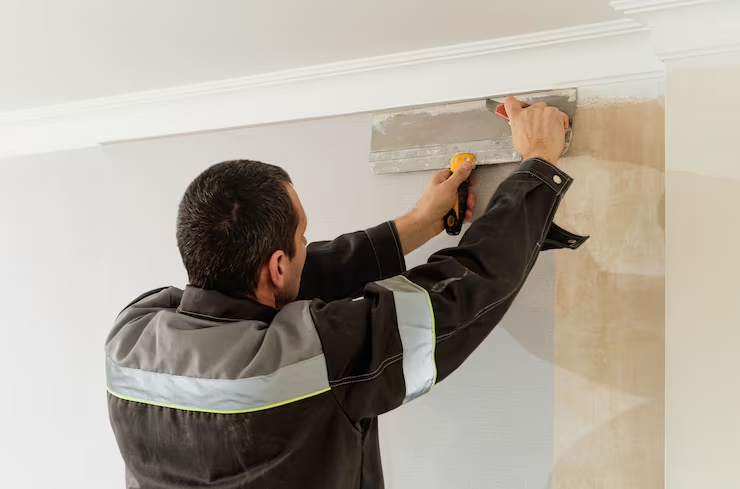
A crack in a wall or ceiling is easy to ignore. You live with it, develop a mental habit of not looking at that corner, and tell yourself you'll deal with it eventually. And most of the time, it really is minor — a hairline crack from normal plaster movement that can be filled in twenty minutes.
But sometimes, a crack is a symptom of something more serious. Foundation movement, water ingress, structural deflection, or termite damage all show up as cracks in walls and ceilings before they show up anywhere else. Knowing the difference between a cosmetic crack and a structural one is the most important step in any wall or ceiling repair.
Reading Cracks: What the Shape and Pattern Tell You
Not all cracks are equal. The shape, orientation, width, and pattern of a crack provide useful diagnostic information:
Hairline cracks following paint or plaster joints: These are almost always cosmetic. Plaster expands and contracts with humidity and temperature, and hairline cracks at paint joints and cornice junctions are a normal result of this movement in Sydney's variable climate. Fill, prime, and paint.
Diagonal cracks from window or door corners: Common in rendered masonry and brick homes in Sydney. Usually caused by differential settlement or thermal movement. Single cracks of this type in an older property are often historic and stable. Monitor them over time — if they're growing, they warrant investigation. If they've been stable for years, fill and repair with a flexible filler.
Staircase cracks in brick mortar joints: These follow the mortar lines in a stepped pattern and indicate movement of the masonry. This can be caused by foundation movement, reactive soil expansion and contraction, or long-term settling. In Sydney's clay-heavy soils in the west and south, this pattern is common. For minor historic cracking, repointing and render repair is appropriate. For active movement, a structural engineer's assessment is warranted before any cosmetic repair.
Horizontal cracks in walls: These are potentially more serious than diagonal or vertical cracks. Horizontal cracking in a brick or block wall can indicate bending, which is a structural failure mode. Get a structural engineer to look at horizontal cracking before doing any repair work.
Wide cracks (greater than 5mm): Width alone doesn't determine severity, but wider cracks generally indicate more significant movement and warrant investigation into the cause before repair.
Water Damage: The Most Common Source of Wall and Ceiling Repairs in Sydney
In Sydney, the most common cause of significant wall and ceiling damage isn't structural — it's water. Water staining, bubbling paint, sagging plaster, and mould growth are all symptoms of water getting where it shouldn't be. And in Sydney's mix of ageing residential properties, terrace houses with complex drainage, and coastal buildings, water-related damage is extremely common.
The absolute rule for water damage is: fix the water source before you fix the surface. Painting over a water-stained ceiling fixes nothing. Skim coating over a damp wall produces a surface that will fail within months. The water needs to stop before the repair begins.
Water damage investigations in Sydney typically lead to: failed roof flashings or valleys, blocked or overflowing gutters, failed plumbing joints within the wall or ceiling cavity, condensation from inadequate insulation and ventilation, and rising damp from failed damp courses in older properties.
Once the water source is fixed and the affected materials have dried thoroughly (which can take weeks in Sydney's humid conditions), the repair work can begin. This typically involves removing and replacing any damaged plasterboard, re-skimming affected areas, applying a stain-blocking primer to prevent any residual staining from bleeding through the new paint, and then priming and painting.
Types of Wall and Ceiling Repair Work
Hairline crack filling: A simple task with a flexible filler (Selleys No More Gaps or equivalent), sanded smooth and primed. The key is using a paintable filler that won't crack again on the first humidity cycle.
Larger crack and hole repairs: Holes and cracks larger than a few millimetres require patching — either with a fibreglass mesh tape backed with joint compound on plasterboard, or with a basecoat render on masonry. The repair needs to be built up in layers, sanded flush between applications, and primed before painting.
Skim coating: When a wall or ceiling surface has multiple small imperfections, old repairs, or a generally rough texture that shows through paint, skim coating (applying a thin coat of finish plaster or joint compound over the entire surface) is the most efficient solution. A skilled plasterer can skim a room in a day and produce a surface that looks new.
Plasterboard replacement: When plasterboard is water damaged, has significant holes, or has been removed during plumbing or electrical work, replacement of the affected sheets followed by taping, jointing, and skimming is required. On ceilings, this is best left to professionals — ceiling plasterboard work requires the right support and skill to achieve seamless joints that don't crack as the building moves.
Cornices and Decorative Plasterwork
Many older Sydney homes have original fibrous plaster cornices and ceiling roses — these are genuinely valuable heritage features that are worth preserving. Repairing damaged or missing sections of original fibrous plasterwork requires matching the profile (which can involve custom-made templates) and the mix (lime plaster rather than modern gypsum-based products in many heritage applications). This is skilled, time-consuming work, and it deserves specialists who understand heritage plaster.
Need ceiling and wall repairs in Sydney?
We diagnose, repair, and repaint — from hairline cracks to full plasterboard replacement and water damage remediation. Honest assessment, quality repairs, and a finish that matches the surrounding surface. Call 0424 125 125.
Book a Wall & Ceiling Repair AssessmentShare this article: